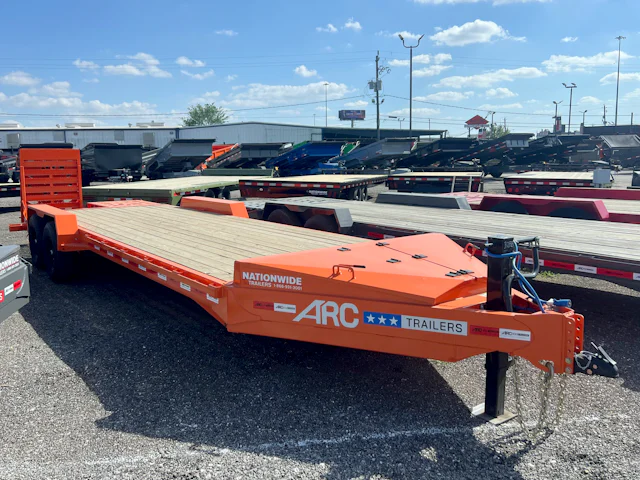

ARC Trailers ARC BEG 20' × 83" General-Purpose Equipment Trailer
- 20 ft
- 14,000 lb GVWR
- Bumper Pull
- Grey
Real Deal™ Price
$4,498 – $6,199
38 ready today at 11 locations
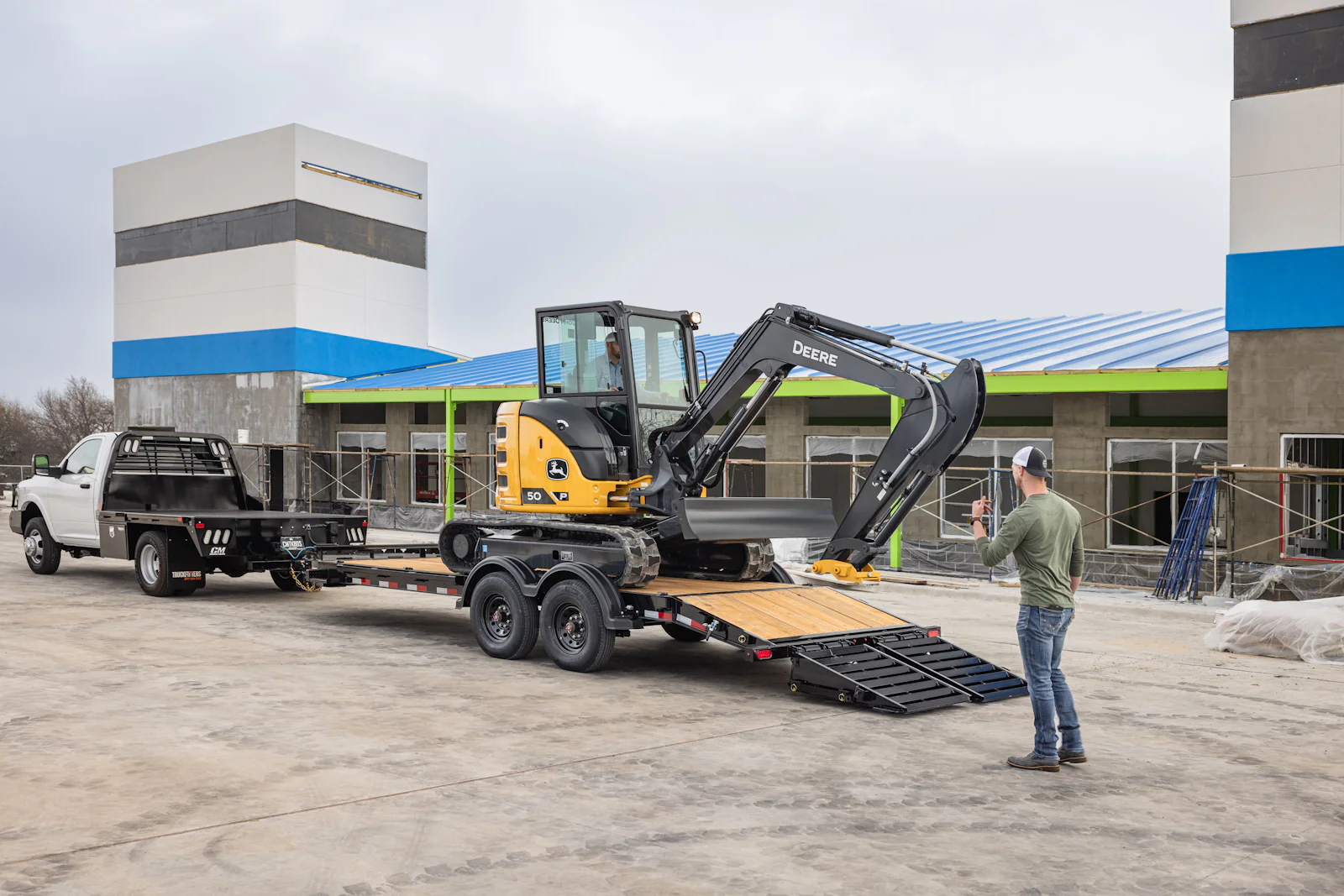
Don't see the right lowboy trailer? 88 are available for delivery from 14 stores in TX, OK, AR, MO & AZ. Get a delivery quote →
$0 down · same-day approval Soft credit check, no hit to your score. All credit levels welcome.
Pre-qualify →Before you buy
Start with current lowboy trailer inventory, then compare the exact trailers that fit your equipment, jobsite, and tow vehicle. A lower loading deck or well can help with loading angle and loaded height, but designs vary. Contractors, equipment operators, farmers, landscapers, and vehicle haulers should match the trailer to the complete machine, attachments, loading conditions, securement plan, and route.
Use each live listing and the exact trailer label as the source for dimensions, ratings, equipment, price, and location.
Record operating weight with fluids, attachments, tools, and anything else carried on the trip. Measure overall width, length, height, wheelbase or track length, tire or track path, ground clearance, and required securement space. Match those measurements to the exact usable loading zones rather than relying on the equipment or trailer name.
Agriculture buyers may move small tractors and implements; construction crews may haul compact equipment; landscapers may carry mowers and attachments; vehicle transporters must check wheelbase, tire path, and clearance. A low deck may help loading geometry or loaded height, but the exact layout, ratings, and securement points must fit the load.
Compare the low deck or well, upper and rear loading zones, deck height, fender and frame clearance, transition points, side access, and usable length. Check ramp or tail width, length, rating, traction, approach and breakover angles, ground clearance, and the machine’s tire or track path under actual loading conditions.
Use the exact trailer’s GVWR and labeled or actual empty weight with installed options to determine available payload. Verify load distribution, pin or tongue weight, axle and tire ratings, brakes, hitch, tow-vehicle and combination ratings, and rated securement points. Follow the trailer, equipment, and cargo-control instructions.
Compare the exact trailer’s frame and steel construction, axles, tires, suspension, jacks, wiring, welds, finish, deck, loading equipment, and warranty information. In-stock equipment and configurable options vary by manufacturer, model, and dealership. Confirm what is installed, what can be ordered, the added price, and the expected turnaround before buying.
A lowboy emphasizes a lower loading surface or well, which may help with loading angle or loaded height. Equipment trailer is a broader category with many deck and loading layouts. A deckover places the deck above the wheels for uninterrupted width but usually at a higher loading height. For each live trailer, compare the listed condition, price and location, deck height, usable dimensions, GVWR, empty weight and payload when provided, axle and tire ratings, hitch and brakes, loading system, securement layout, installed options, and warranty information. Verify the exact model, rating plate, equipment, and availability with the selling dealership.
A lowboy trailer has a loading deck or well positioned lower than other portions of its frame to support lower loading angles or loaded height. The term covers multiple designs, so deck placement, ramps or tail, pull type, axles, and ratings must be checked on the exact model.
Lowboy trailers may fit contractors, equipment operators, farmers, landscapers, and vehicle haulers moving machines or loads that benefit from a lower loading surface. Common examples include compact equipment, small tractors, implements, mowers, attachments, and vehicles. Suitability depends on the exact load, deck, clearance, loading system, ratings, and securement plan.
Choose around the load and loading conditions. A lowboy may help with loading angle or loaded height, an equipment trailer offers a broad range of machine-hauling layouts, and a deckover provides uninterrupted deck width at a typically higher deck level. Compare usable dimensions, clearance, loading access, payload, pull type, and the exact trailer’s ratings.
Available options and made-to-order paths depend on the manufacturer, model, and dealership. Compare in-stock trailers first, then ask a trailer specialist to verify compatible axles, tires, jacks, loading equipment, securement features, finish, and other options. Confirm the complete specification, price, deposit terms, turnaround time, and pickup or delivery plan before ordering.
Compare advertised prices on live inventory with the exact model, condition, ratings, deck and loading layout, installed options, location, and warranty information. Current deals, financing programs, manufacturer offers, fees, and eligibility can change and may apply only to specific stock numbers or stores, so confirm the complete terms with the selling dealership.
Read verified customer reviews by location to evaluate dealership experiences such as inventory selection, communication, buying support, parts, and service. Reviews reflect individual customer experiences; verify current inventory, pricing, options, delivery availability, and service directly with the selling store.