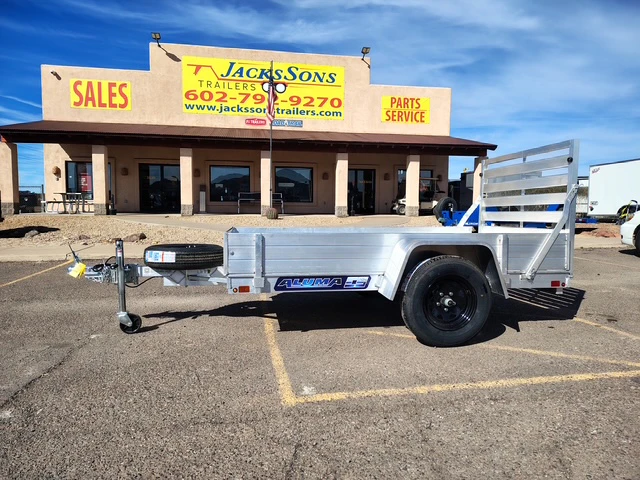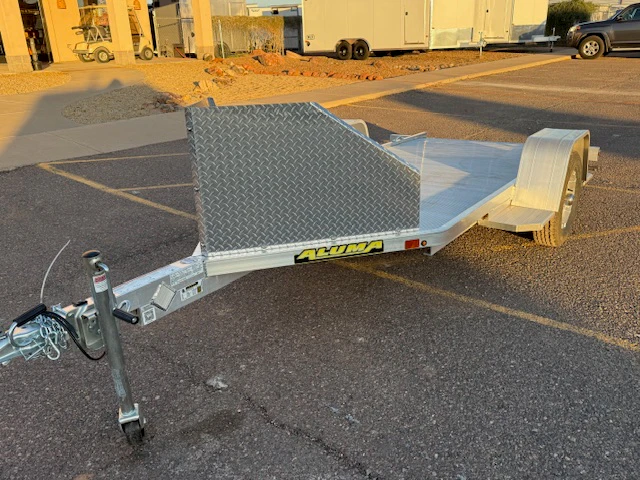

Spartan 5'x8' Enclosed Cargo Trailer w/ Rear Ramp Door (C1)
- 8 ft
- 2,990 lb GVWR
- Bumper Pull
- White
Real Deal™ Price
$3,198
9 ready today at 5 locations
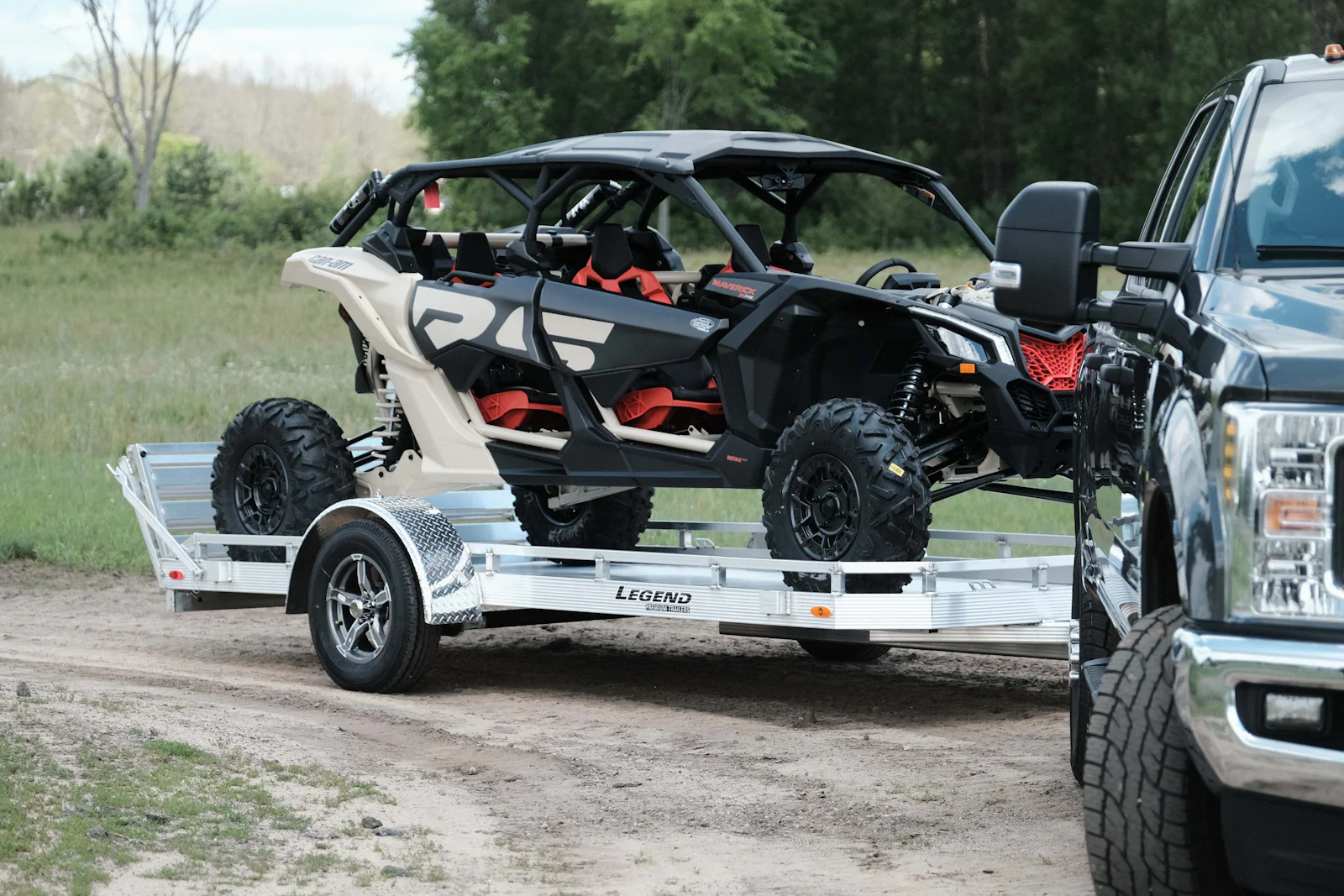
Don't see the right aluminum trailer? 145 are shippable from our 14 stores across TX, OK, AR, MO & AZ. Get a delivery quote →
$0 down · same-day approval Soft credit check, no hit to your score. All credit levels welcome.
Pre-qualify →Before you buy
Start with current aluminum trailer listings, then compare only the trailers that fit your cargo, loading method, tow vehicle, and budget. Aluminum construction can reduce empty weight relative to a similarly equipped steel design and does not form red rust, but finished weight, payload, durability, maintenance, and value still depend on the complete trailer.
Use the exact listing and manufacturer information for dimensions, ratings, construction, equipment, price, warranty information, and availability.
Choose the body style for the work before choosing the material. Aluminum construction may be used in utility, enclosed cargo, car, ATV or motorcycle, flatbed, equipment, livestock, and other trailers. Compare usable dimensions, floor or deck, doors, tie-downs, ramps or bi-fold gates, ATP sides, and axle or suspension design on the exact trailer; types and features vary by model and current listings.
Compare the exact trailer’s labeled or documented empty weight, GVWR, installed options, and resulting payload with a similarly configured alternative. A lower empty weight may leave more capacity for cargo within the applicable ratings and can change the towing load, but it does not make every aluminum trailer easy to tow or suitable for a particular tow vehicle.
Review the frame, tongue or coupler, crossmembers, floor or deck, body, fasteners, welds or joints, axles, tires, brakes, ramps, and any steel or other materials in the completed trailer. Alloy, member size, joining method, concentrated-load support, and mixed-material details affect performance and repair needs, so material alone does not establish durability or longevity.
Aluminum does not form red rust like steel, which can be useful in wet or corrosive conditions, but it can oxidize and mixed metals can create galvanic corrosion. Wash road salt and chemicals as directed, inspect the structure and contact points, and maintain bearings, brakes, tires, lights, fasteners, and loading equipment. Confirm approved repair methods and service access for the exact construction.
Compare advertised pricing with the exact condition, ratings, construction, installed equipment, location, and warranty information. Current stock, deals, financing programs, fees, parts, and service capabilities can differ by trailer and dealership. Use verified customer reviews as one input, then confirm the complete purchase terms and post-purchase support with the selling store.
Aluminum often offers lower empty weight and resistance to red rust when compared with a similarly equipped steel trailer. Steel may offer a different purchase price, design, repair path, or fit for the load. Neither material makes every completed trailer universally lighter, stronger, longer-lasting, or lower-maintenance, and some trailers combine aluminum, steel, and other materials. For each current listing, compare trailer type, condition, price and location, usable dimensions, documented empty weight, GVWR and payload, frame and floor construction, axle or suspension design, tires and brakes, loading equipment, securement, installed options, corrosion and maintenance guidance, repair access, and warranty information. Verify specifications, equipment, availability, and purchase terms with the selling dealership.
Depending on the complete design, aluminum can provide a lower empty weight than a comparable steel trailer and resistance to red rust. Those traits may help buyers who tow frequently or operate in wet or corrosive conditions. Actual payload, towing behavior, durability, maintenance, and lifespan depend on the exact structure, equipment, load, environment, and care.
Aluminum construction may appear in utility, enclosed cargo, car, ATV or motorcycle, flatbed, equipment, livestock, and other trailer types. Ramps, bi-fold gates, ATP sides, torsion axles, floors, doors, and tie-down layouts are model-specific. Browse current listings first and verify the body style and installed features on the exact trailer.
An aluminum trailer may weigh less than a similarly sized and equipped steel trailer, but body type, frame, dimensions, axles, floor, ramps, interior, and options all affect finished weight. Compare documented empty weights and the complete truck-and-trailer ratings. Lower trailer weight does not by itself guarantee easy towing or less tow-vehicle wear.
Aluminum does not form red rust like steel, but it can oxidize and can corrode where unlike metals, salts, or chemicals are present. It is not maintenance-free. Follow the manufacturer’s cleaning and inspection schedule for the structure, fasteners, welds or joints, floor, axles, brakes, tires, electrical systems, and mixed-material contact points.
Start with current inventory and compare the advertised price with the exact model, condition, construction, ratings, installed options, location, and warranty information. Stock, deals, financing, fees, and eligibility can change and may apply only to certain trailers or stores, so confirm availability and complete purchase terms with the selling dealership.
Look for clear specifications for the exact trailer, knowledgeable help comparing the load and tow vehicle, transparent purchase terms, financing information, verified customer reviews, and available parts or service support. Inventory and capabilities vary by dealership, so confirm who will handle inspection, warranty questions, maintenance, and repairs before buying.