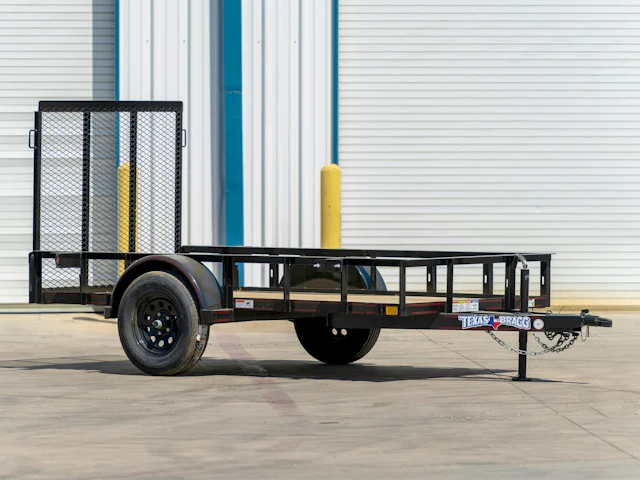
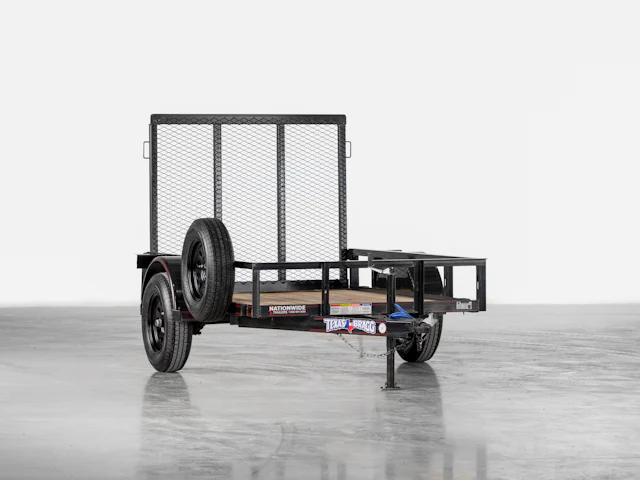
Texas Bragg 8'x60" Utility Trailer w/ 4' Gate (U1)
- 8 ft
- 2,995 lb GVWR
- Bumper Pull
- Black
Real Deal™ Price
$1,498 – $1,899
23 ready today at 10 locations
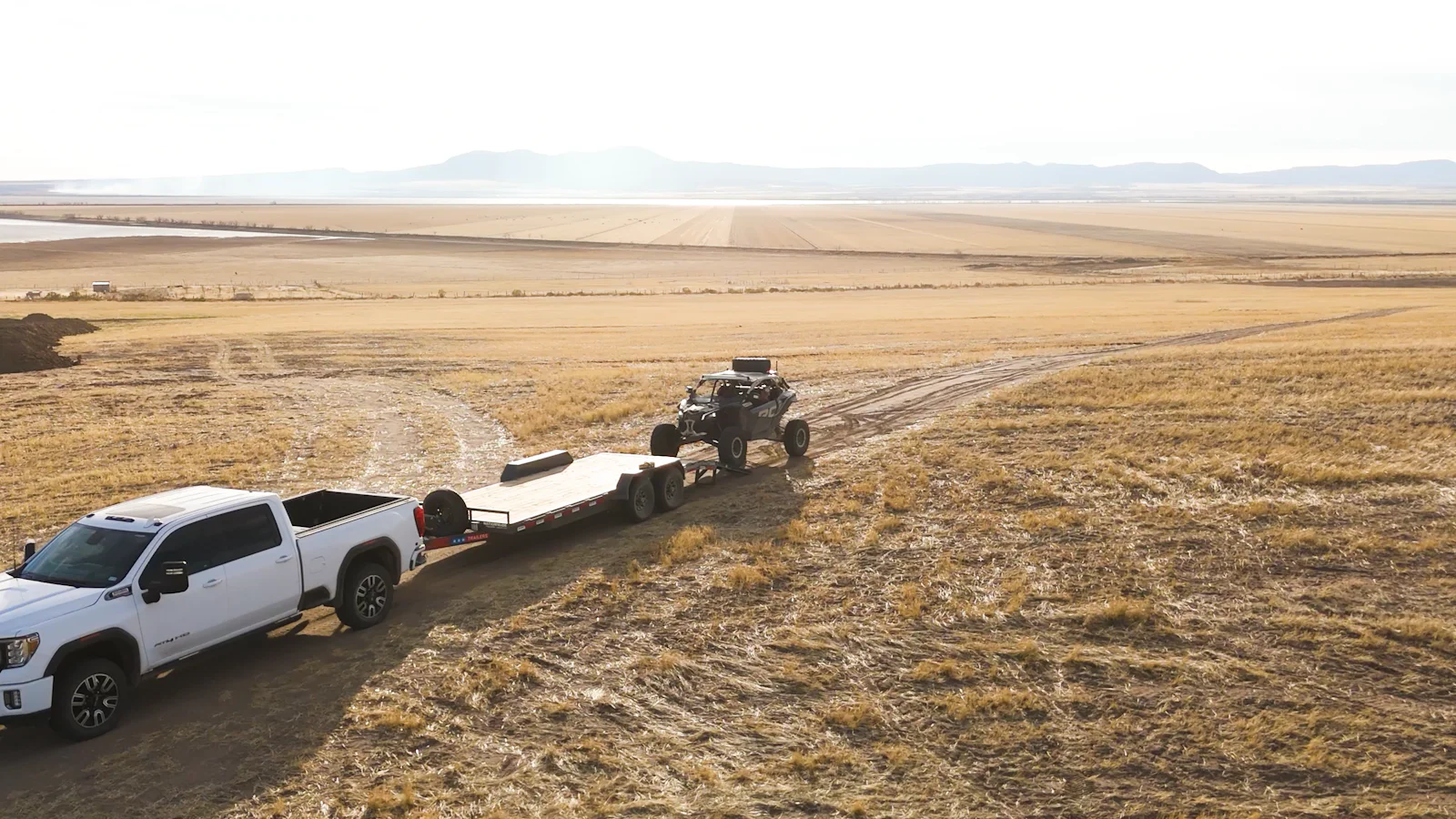
Channel-frame utility trailers for hauling mowers, materials, and general loads. Single axles tow easy behind an SUV or half-ton; tandems carry more and tow steadier.
Don't see the right utility trailer? 541 are available for delivery from 14 stores in TX, OK, AR, MO & AZ. Get a delivery quote →
$0 down · same-day approval Soft credit check, no hit to your score. All credit levels welcome.
Pre-qualify →Before you buy
Start with live utility trailer inventory, then compare exact trailers around the cargo and recurring job. Utility trailers can support yard work, landscaping, agriculture, construction, property maintenance, household moves, motorcycles, ATVs, and light equipment when the deck, sides, loading system, ratings, securement, and tow vehicle fit the complete load.
Measure the cargo and loading path first, then use each live listing for exact dimensions, ratings, equipment, price, and location.
List what the trailer must carry and how often: landscaping materials, mowers, tools, farm supplies, lumber, drywall, furniture, appliances, motorcycles, ATVs, or light equipment all create different space, weather-protection, loading, weight-distribution, and securement needs. Confirm that the exact trailer is designed and rated for the planned load.
Measure cargo width, length, height, operating weight, tire or track path, and attachments. Compare usable deck dimensions, space between rails or fenders, rear opening, tie-down access, and wood, steel, or other floor construction. Open rails, angle or pipe tops, tube frames, mesh or high sides, and side extensions change containment, visibility, weight, and loading access; features vary by trailer.
Match the loading system to whether cargo will be carried, rolled, driven, or loaded from the side. Compare rear and side landscape gates, ramps, removable sides, gate opening, approach and breakover angles, traction, rating, support, storage, and clearance. Verify the manufacturer’s loading procedure before using any gate or ramp with equipment or a concentrated load.
A single-axle trailer may fit smaller, lighter loads and simpler maneuvering needs, while tandem axles are commonly considered for larger trailers or heavier recurring loads. Axle count alone does not establish payload or towing suitability. Compare the exact GVWR, empty weight, payload, axle and tire ratings, brakes, deck size, maintenance needs, and tow-vehicle limits.
Determine payload from the exact trailer’s GVWR and labeled or documented empty weight with installed equipment. Verify load distribution, rated securement points, coupler and hitch, lights, safety equipment, tires, axles, brakes where equipped, and tow-vehicle ratings. Compare listed price, condition, options, warranty information, inspection, financing, registration needs, and available parts or service support with the selling store.
Open rails can simplify visibility and tie-down access, while mesh or solid high sides may help contain appropriate cargo. Side extensions add containment but also affect empty weight, wind exposure, access, and usable dimensions. Wood, steel, mesh, and other deck or floor designs suit different loads and maintenance needs. Rear ramps, landscape gates, side gates, and removable sections support different loading workflows. Before buying, verify the exact condition, price and location, usable deck and opening dimensions, GVWR, documented empty weight and payload, axle and tire ratings, brakes, hitch, floor, sides, gate or ramp rating, tie-downs, installed options, warranty information, registration documents, and current availability. Confirm financing, fees, inspection, pickup or delivery, parts, and service details with the selling dealership.
Utility trailers may carry landscaping materials, mowers, tools, farm supplies, lumber, drywall, furniture, appliances, motorcycles, ATVs, and light equipment. Suitability depends on cargo dimensions and weight, weather exposure, deck and side clearances, loading access, distribution, securement, trailer ratings, and the tow vehicle. Check the exact trailer and planned load rather than relying on the category name.
Choose from the actual cargo dimensions and loaded weight, plus the space required to load, position, and secure it. Check usable deck width and length, side and fender clearance, gate opening, ramps, weight distribution, payload, and towing equipment.
Choose from the complete load, trailer size, operating conditions, service needs, and tow vehicle. Single-axle models may suit smaller and lighter jobs; tandem-axle models are commonly evaluated for larger decks or heavier recurring loads. Compare the exact GVWR, empty weight, payload, axle and tire ratings, brakes, and manufacturer specifications rather than choosing by axle count alone.
Match the setup to the cargo and loading workflow. Open rails offer access and visibility; mesh or high sides and extensions may help contain suitable material; floor materials affect traction, support, and maintenance; landscape gates, ramps, side gates, and removable sections change loading access. Verify usable dimensions, construction, ratings, and installed features on the exact trailer.
Start with the exact trailer’s GVWR and subtract its labeled or documented empty weight with installed options to estimate available payload. Then verify axle and tire ratings, coupler and hitch, brakes, load distribution, securement, tow-vehicle ratings, and the complete combination. Do not use GVWR as the cargo allowance or assume every trailer is easy to tow.
Compare current listings by exact model, condition, deck size, construction, GVWR, empty weight and payload when provided, axles, tires, brakes, sides, loading equipment, options, location, advertised price, and warranty information. Deals, financing, down payments, fees, eligibility, and availability can vary by stock number and store. Review verified customer feedback, then ask the selling dealership to confirm the complete terms, inspection, paperwork, pickup or delivery plan, and available parts, maintenance, and repair support.