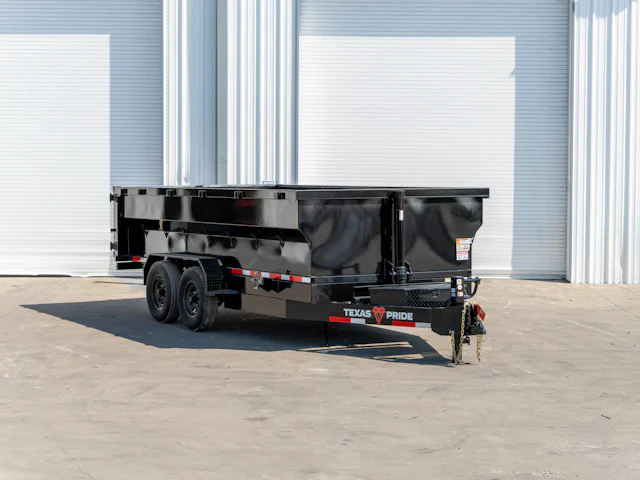

TrailMaxx 14'x83" Telescopic Dump Trailer w/ 24" Sides (TM,DP,14X83)
- 14 ft
- 14,000 lb GVWR
- 24 in sides
- Bumper Pull
Real Deal™ Price
$8,449
8 ready today at 4 locations
Browse live telescopic dump trailer inventory, then compare bed size, GVWR, gate, hitch, hydraulic setup, price, and location.
Special Offer
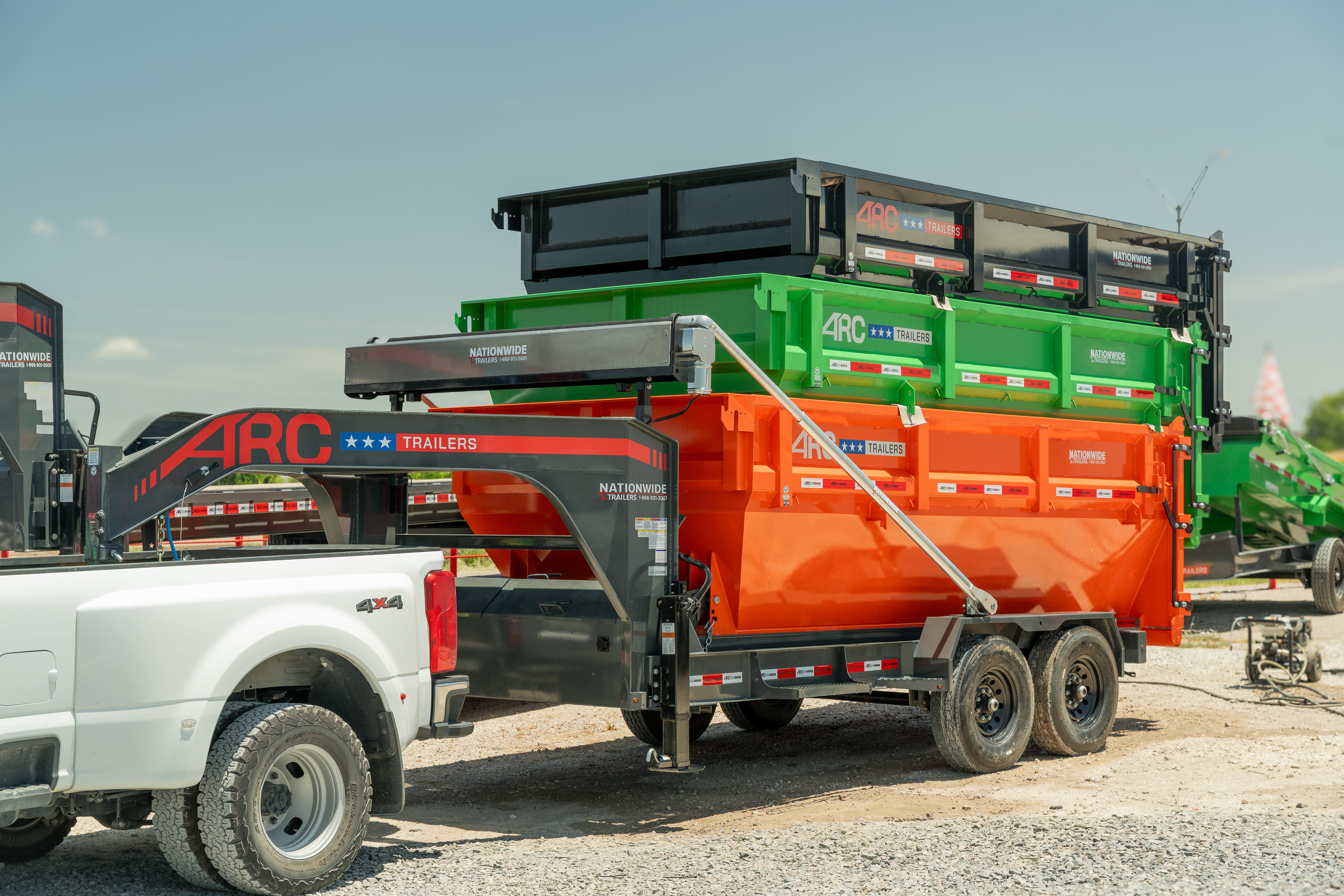
Roll-Off Trailer + Dump Bin Packages
Get a qualifying roll-off dump trailer and three matching dump bins at limited package pricing.

Special Offer
$500 Texas Pride Dump Trailer Instant Rebate
Save $500 on qualifying new 14 ft Texas Pride bumper-pull dump trailers with 2 ft sides at Dallas, Fort Worth, Van Alstyne, San Antonio, Houston, and Pasadena. $7,949 after instant rebate.
Don't see the right dump trailer? 805 are available for delivery from 14 stores in TX, OK, AR, MO & AZ. Get a delivery quote →
$0 down · same-day approval Soft credit check, no hit to your score. All credit levels welcome.
Pre-qualify →A telescopic dump trailer uses a multi-stage hydraulic cylinder to raise its bed. Buyers commonly consider this setup for hauling and unloading landscaping materials, gravel and soil, construction debris, scrap, waste, equipment, and farm or job-site supplies. Job fit still depends on the complete trailer, so compare the lift with the exact trailer’s bed, ratings, gate, loading equipment, hitch, controls, and service access.
Nested cylinder sections extend in stages to create the travel needed to raise the bed. The cylinder, mounting position, hydraulic pressure, bed geometry, and load placement all affect the lift path and unloading behavior. When comparing inventory, look at the complete hydraulic system and the access available for inspection and service, not the hoist label alone.
It is a dump trailer whose bed is raised by a multi-stage hydraulic cylinder that lengthens as its nested sections extend.
Neither lift type is automatically better. Compare the complete models that meet your payload, bed, hitch, gate, control, unloading, and service requirements. Use the linked lift-system comparison for a closer look at the two designs.
No. Dump angle depends on the specific cylinder, mounting position, bed geometry, and trailer design. Confirm the specifications of the exact trailer.
Depending on its exact ratings and configuration, a dump trailer may be used for landscaping materials, gravel and soil, construction debris, scrap, waste, equipment, or supplies. Use the trailer’s labeled payload, bed dimensions, gate, and loading equipment to decide whether it fits a particular load.
Check the exact trailer’s GVWR, empty weight, labeled payload, bed dimensions, side height, gate style, hitch, axle setup, tires, brakes, hydraulic controls, and included loading or securement equipment. Then verify the tow vehicle and hitch are rated for the loaded combination.
Follow the trailer and hoist manufacturers’ schedules. Routine checks commonly include the cylinder and mounting points, hydraulic fluid and hoses, battery and connections, gate and ramp hardware, tires, brakes, lights, coupler, jack, and breakaway system. Service needs vary by model and use.